
From$15.85
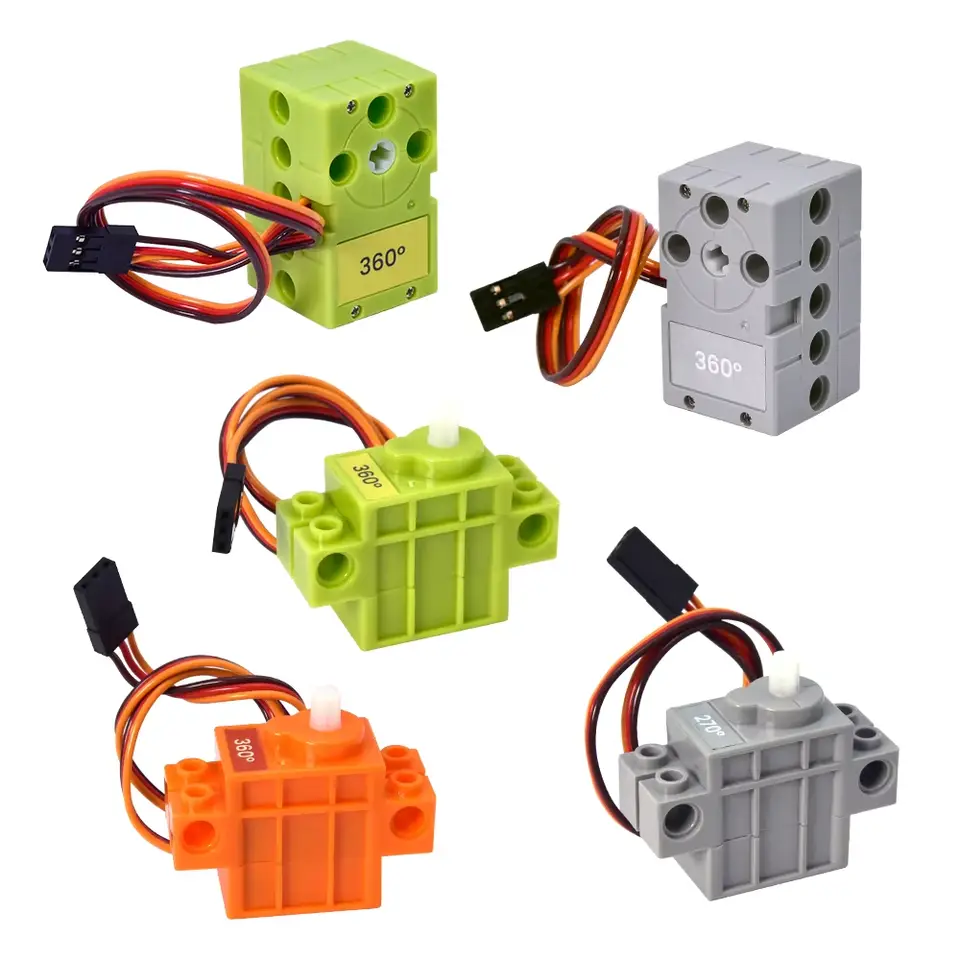
Keyestudio 2kg Servo Motor, 270° or 360°, Lego Compatible, 4.8-6V, for Arduino
Est. delivery 8-14 days
Ships to CanadaPrices in CAD
21 results
From$15.85
Est. delivery 8-14 days

From$25.38
Free shippingEst. delivery 8-14 days


From$8.82
Est. delivery 6-11 days

From$31.95
Free shippingEst. delivery 6-12 days

From$7.81
Est. delivery 6-12 days
From$26.83
Free shippingEst. delivery 6-12 days

From$40.25
Est. delivery 7-15 days
$24.39
Est. delivery 8-15 days
From$26.84
Free shippingEst. delivery 8-14 days
$67.43
Free shippingEst. delivery 9-15 days

From$26.35
Free shippingEst. delivery 9-15 days

From$37.08
Est. delivery 10-17 days

From$8.20
Est. delivery 8-13 days
$40.25
Free shippingEst. delivery 10-16 days
A hobby servo is a small motor, gearbox and position sensor in one case. Send it a pulse every 20 ms and it turns to the matching angle and holds there, which is why robot arms, pan-tilt heads, grippers and RC steering use them. Most PWM servos here are positional, with about 180 degrees of travel; some listings offer 270 or 360 degrees or continuous rotation.
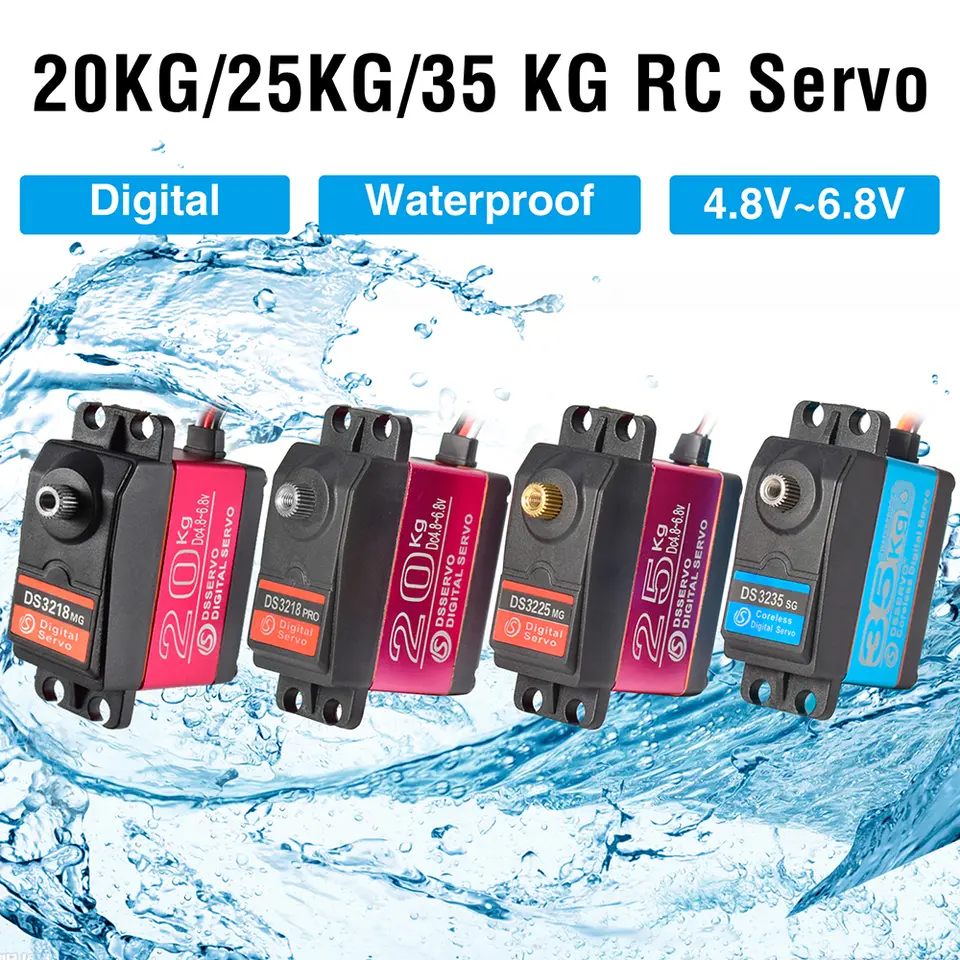
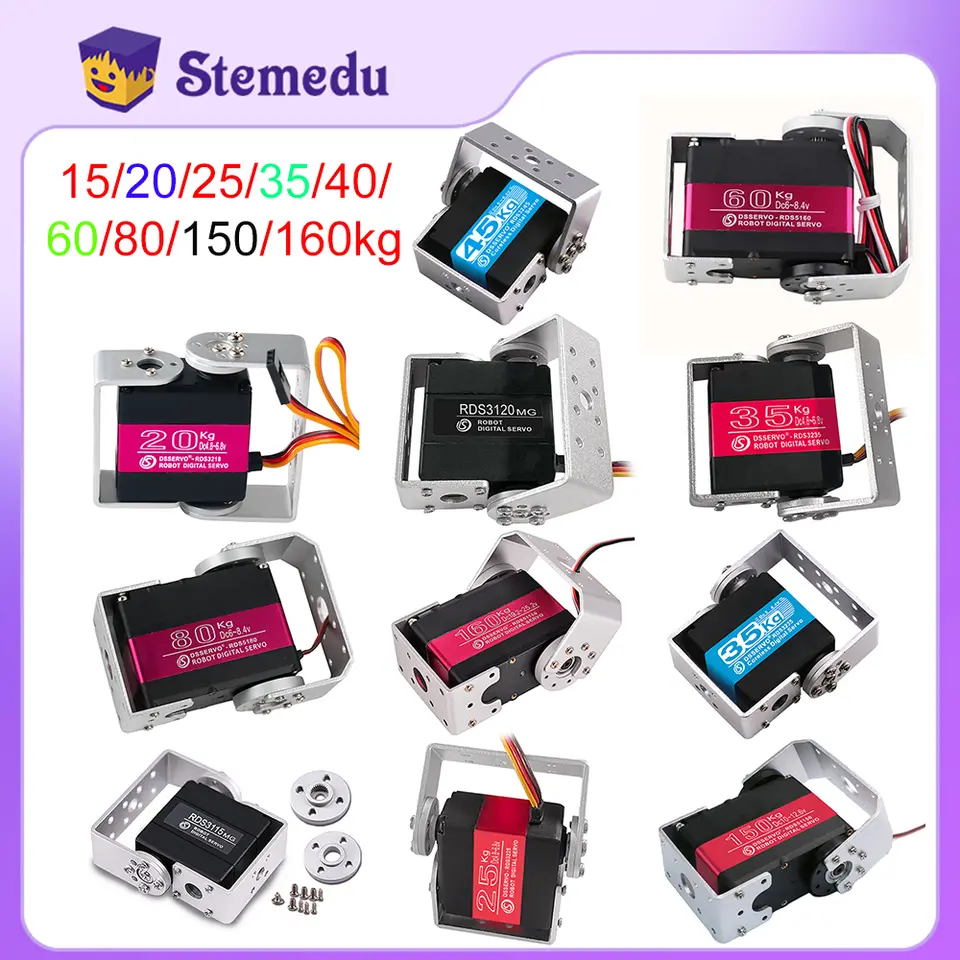
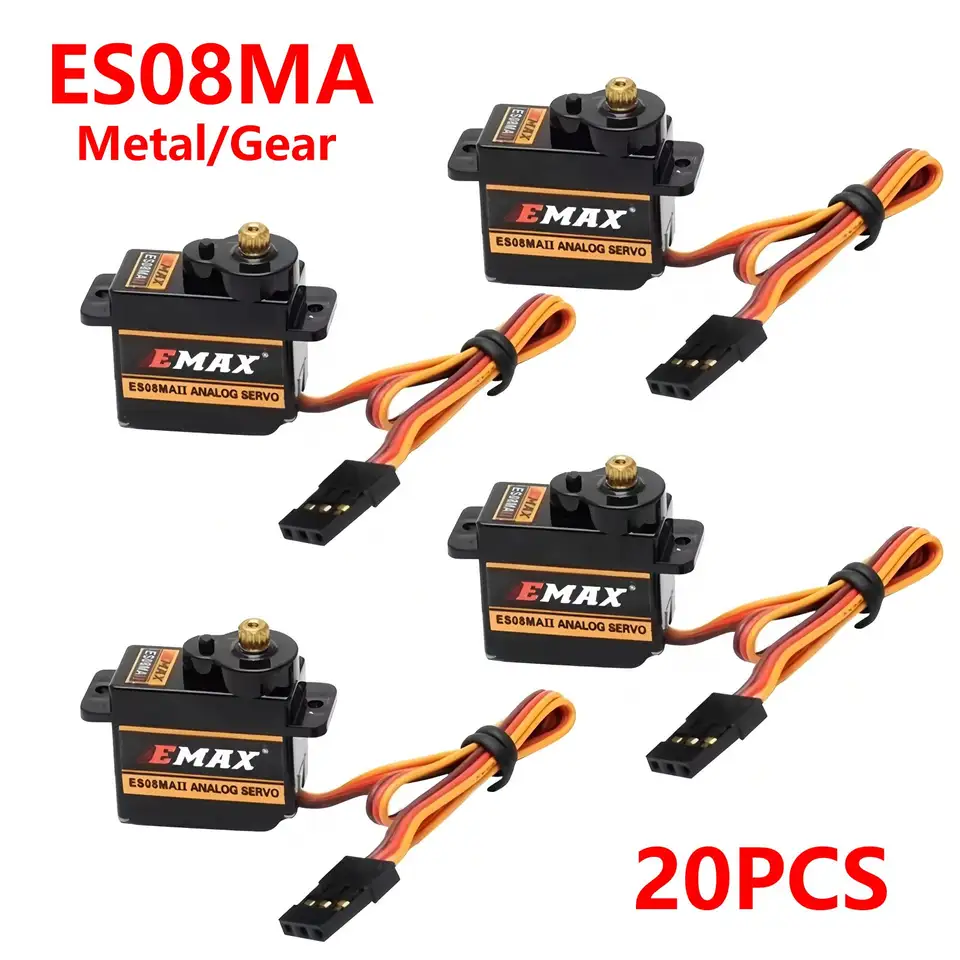
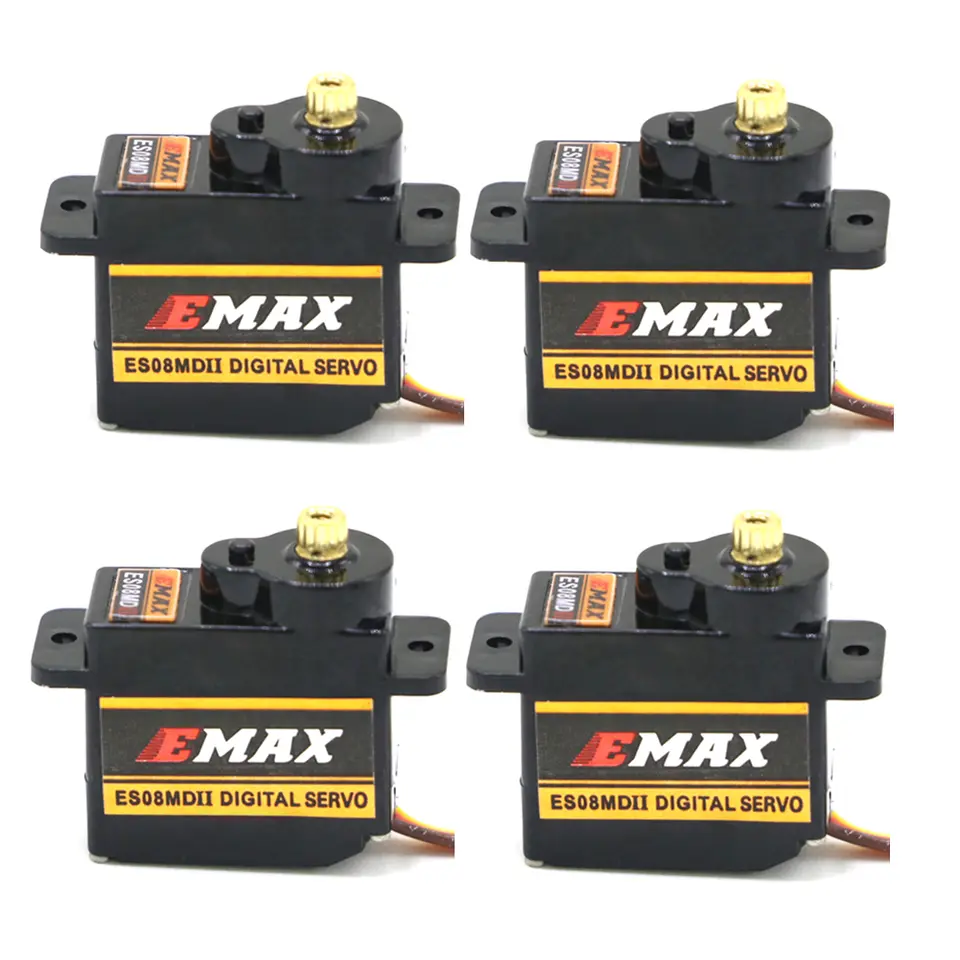
Pick by torque first. The SG90 is the low-cost 9 g starting point, with plastic gears and about 1.8 kg·cm. The MG90S is the same size with metal gears, so it survives knocks and stalls better. The MG996R is a standard-size servo with about five times the torque, for arm shoulders, steering and grippers that lift something. Beyond that, waterproof digital servos such as the DS3218 family and the high-torque RDS series suit larger arms and outdoor robots. Torque is quoted at a stated voltage, so compare servos at the same one.
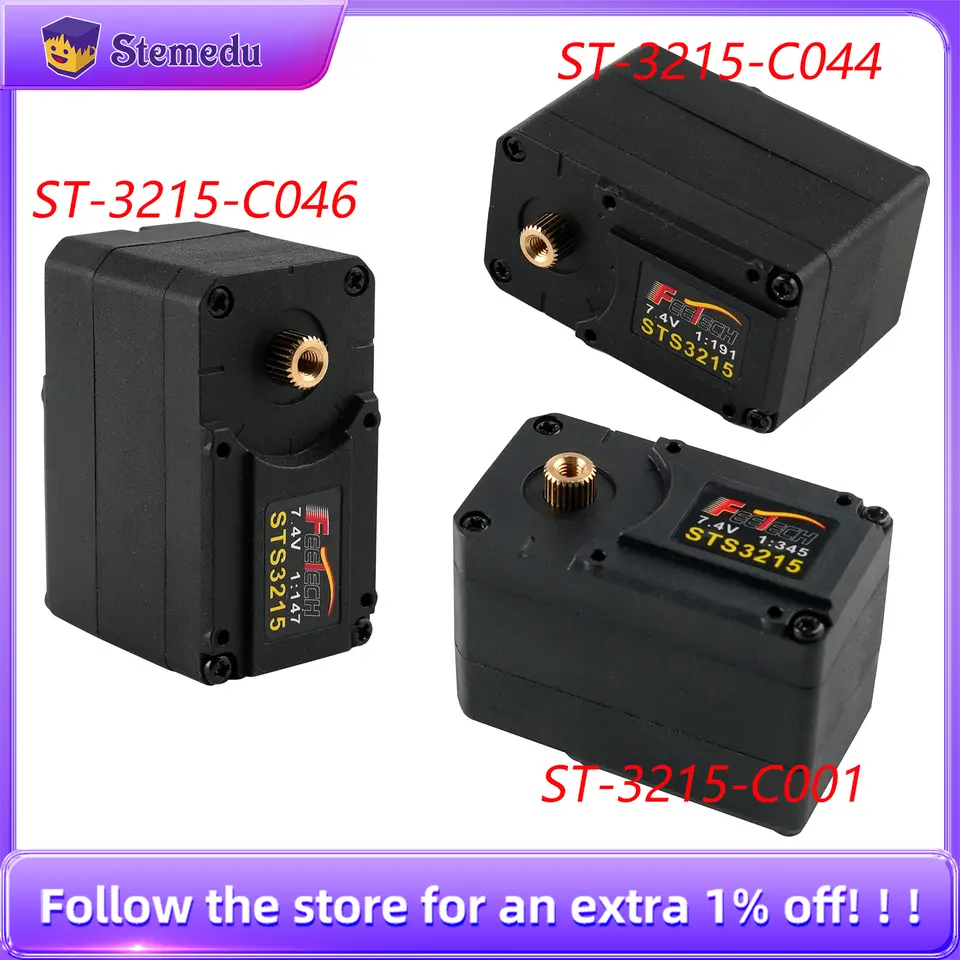
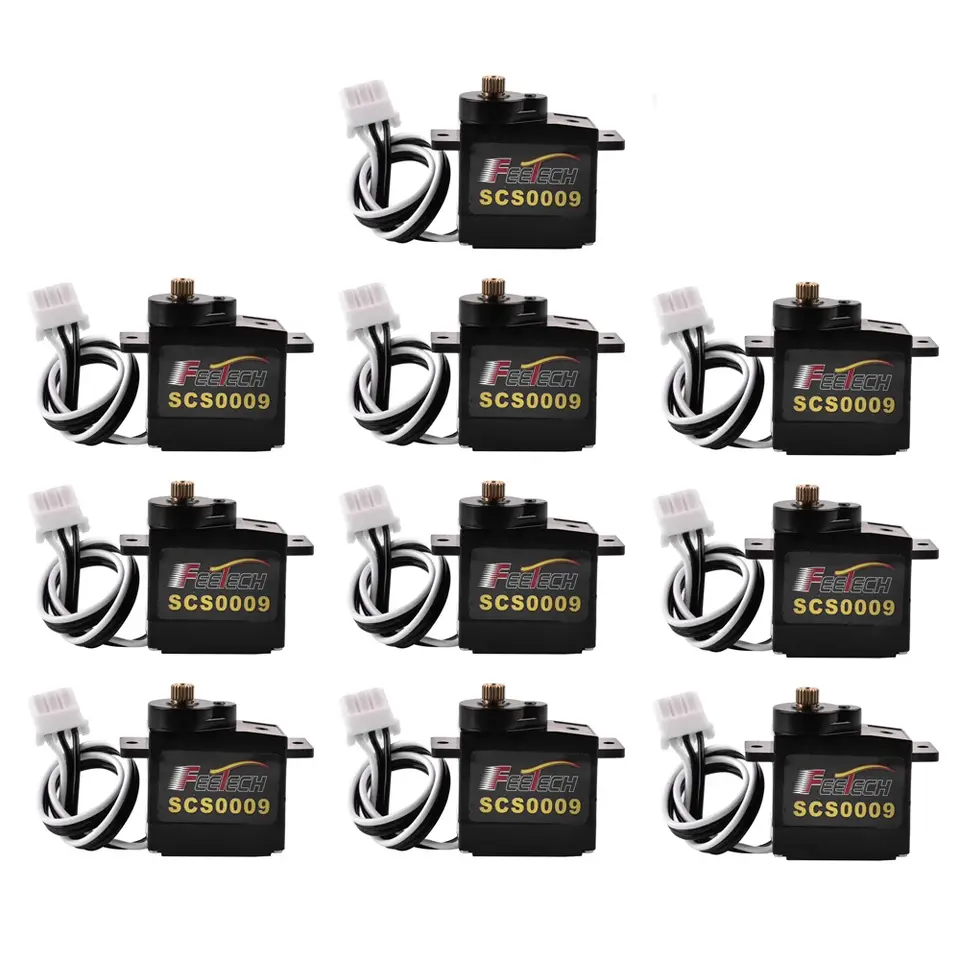
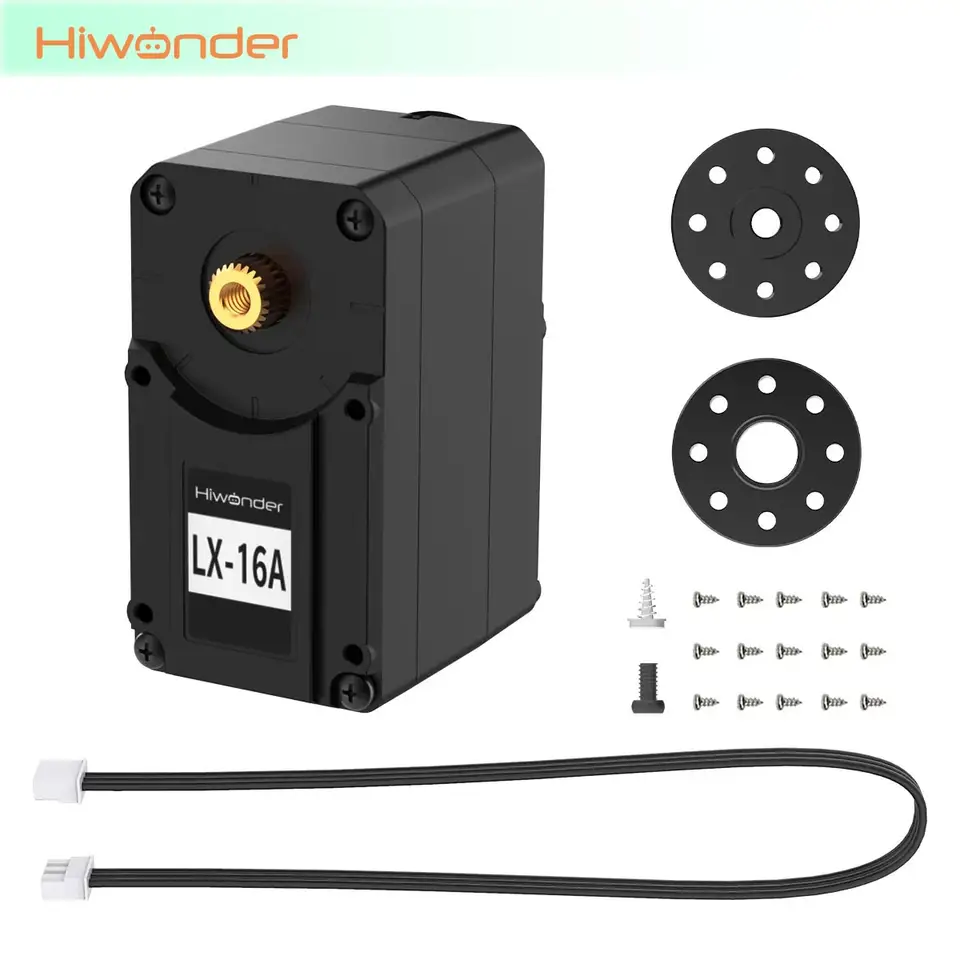
Serial bus servos (Feetech ST3215, STS3215 and SCS0009, Hiwonder LX-16A) share one data line, each with its own ID, and report position, load and temperature. Open-source arms such as the SO-101 are built on them. They need a bus driver board rather than a PWM pin.
Whichever servo you choose, power it from its own supply rated for every servo moving at once, and connect that supply's ground to your controller's.
Quick checks before you order
Estimate the load: the weight beyond the joint times its distance from the shaft. Micro servos like the SG90 and MG90S suit light loads, and a standard-size MG996R handles arm shoulders and steering. Leave a margin below the stall torque on the listing.
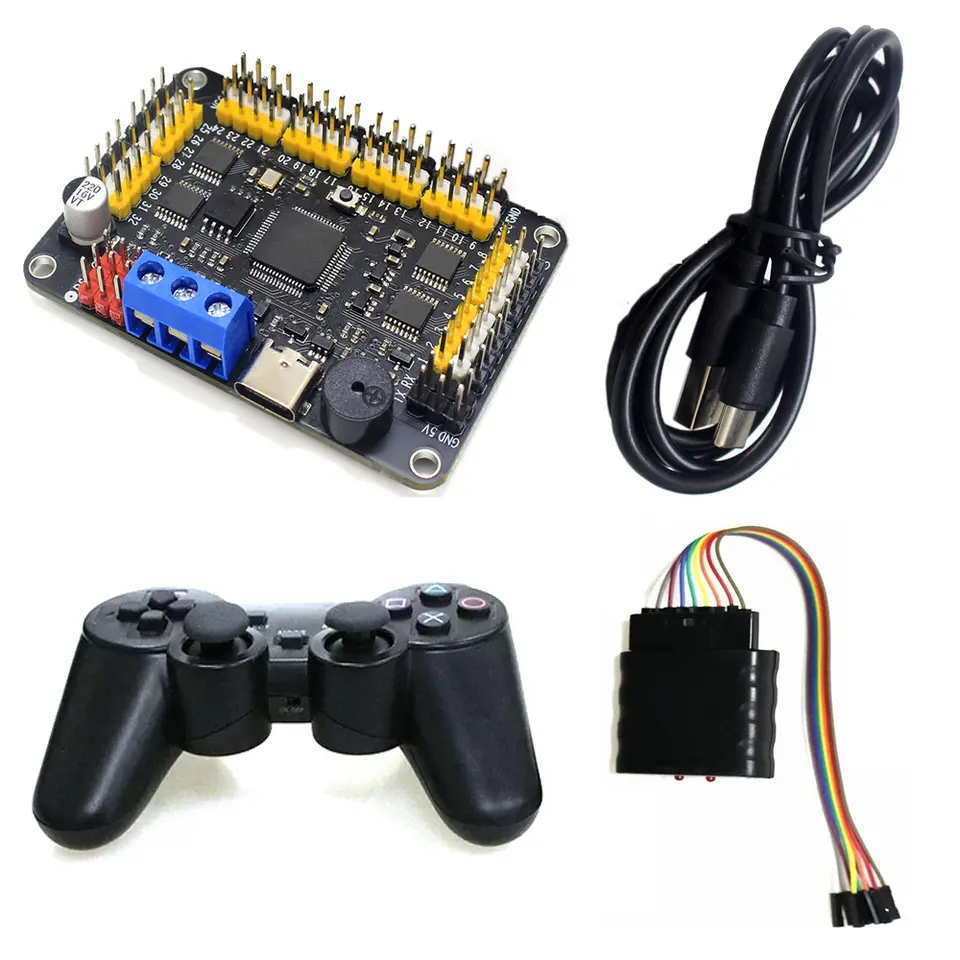
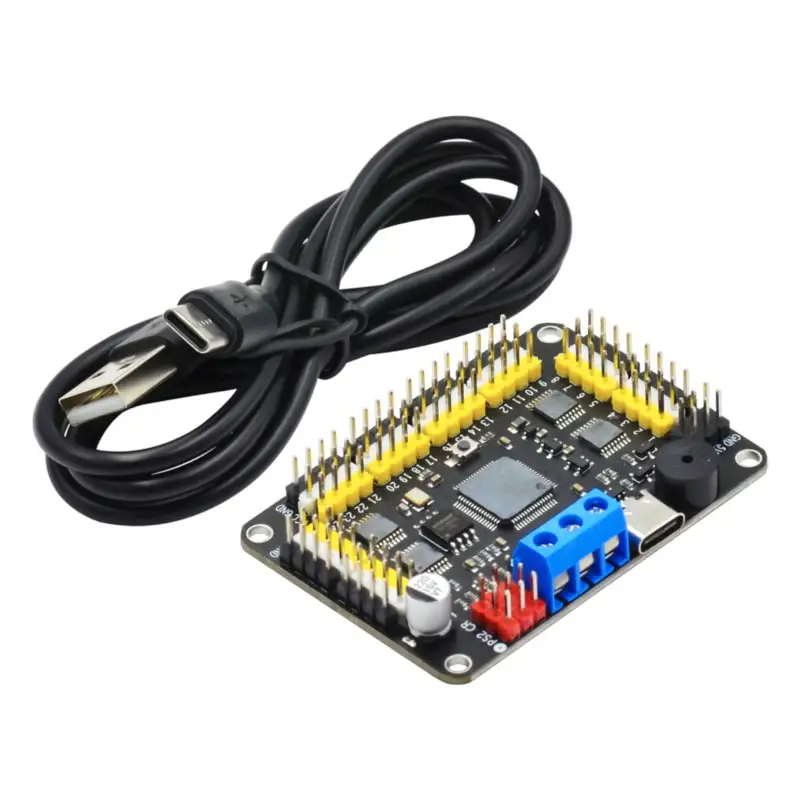
Larger servos can draw more than an amp when they start or stall, so run them from their own supply at the listed voltage and connect its ground to your controller's. For many servos, a PWM driver board keeps the wiring tidy; bus servos need a bus driver board.
Positional servos hold an angle, continuous-rotation servos spin like small gear motors, and serial bus servos add feedback for arms that need smooth, coordinated movement.
Buying guides
Tell us the part name or number, and we'll review it for the catalog.